
Keep it Simple

What’s the most important rule in the Constitution?  What is the most important amendment?  What’s the most important law in the I.R.S. code?  How about the laws in your state: what one is the most important?  Or your city?  Those questions are almost impossibly tough to answer because there are so many laws and the issue of which is most important may seem like it depends upon who is asking and answering.  Supreme Court justices would probably have a hard time answering quickly or definitively.

And yet, when someone asked Jesus what is the greatest commandment in the whole Old Testament, He was ready with a specific answer, an answer that is profound in its simplicity.  It’s an answer that still “works.”

Jesus replied: “ ‘Love the Lord your God with all your heart and with all your soul and with all your mind.’ This is the first and greatest commandment. And the second is like it: ‘Love your neighbor as yourself.’ All the Law and the Prophets hang on these two commandments.” (Matthew 22:37-40)

Jesus pulled out two separate laws, one from Leviticus and one from Deuteronomy.  The first one is pretty prominent and was commonly memorized.  But the other one, about loving your neighbor, is included in a list of miscellaneous commands.  But by singling out these two commands, Jesus captured the essence of what God wants for us – a deep love for God, a genuine love for the other guy.  One law focuses our attention in a vertical direction.  The other is applied horizontally.  Like the shape of the cross…

Maybe you have been puzzled by all the “thou shalts” and “begats” of the Bible.  Maybe you have wondered if this ancient book can possibly apply in this age of smartphones, 3D printers and drones.  Maybe you have tried to live by the 10 commandments or the Sermon on the Mount and have given up in discouragement.  If that’s you, then try this: live by just those 2 commands, applying them to your life, your thoughts and attitudes, according to your own level of understanding.

You will be surprised. Pleasantly.
Quotes: The Holy Bible : New International Version. 1996, c1984 (electronic ed.). Grand Rapids: Zondervan.

Dealing with Fear

Be afraid; be very afraid!  That’s the message of the news shows on TV.  The more you worry, the better they like it, because worry drives their profit.  What do you worry about?  What keeps you awake at night?  Do you have an answer, something specific?  Me too.  If you would like to worry less, here’s a good word:

“God is our refuge and strength, an ever-present help in trouble. Therefore we will not fear, though the earth give way and the mountains fall into the heart of the sea,” (Psalm 46:1-2)

Whoever wrote those words was living at a time when it was frequently necessary to grab a sword and run out to chop and slash murderous attackers,  It’s hard to imagine what that must have been like.  I’d have been pretty jumpy.  Maybe we have it comparatively easy, but worry can still harass us.   Whatever it is that worries you, let those truths soak in and do their work.

And this:

“Be still, and know that I am God; I will be exalted among the nations, I will be exalted in the earth.” (Psalm 46:10)

Quotes: The Holy Bible : New International Version. 1996, c1984 (electronic ed.). Grand Rapids: Zondervan.

An Important Person

He’s brilliant but has always suffered from mild brain damage.  He reads and retains books on lofty, intellectual subjects far beyond my capacity but works as a busboy in a nursing home.  I bumped into him at the store and he was telling me about one of the patients who has Alzheimer’s.  She helps herself to everyone else’s leftovers while he is bussing the tables.  He stopped and thought deeply for a moment and then said, “You know, she is every bit as important as either of us…”

I love it when God speaks through His people. He reminds us that His ways are not like the ways of the world.  Like this:

” My brothers, as believers in our glorious Lord Jesus Christ, don’t show favoritism. Suppose a man comes into your meeting wearing a gold ring and fine clothes, and a poor man in shabby clothes also comes in. If you show special attention to the man wearing fine clothes and say, “Here’s a good seat for you,” but say to the poor man, “You stand there” or “Sit on the floor by my feet,” have you not discriminated among yourselves and become judges with evil thoughts?” (James 2:1-4)

Quotes: The Holy Bible : New International Version. 1996, c1984 (electronic ed.). Grand Rapids: Zondervan.

Ransom

Why would teenage girls leave freedom and join up with ISIS?  Why would they willingly give themselves to a group that enslaves and abuses women?  Somebody must have lied to them, told them they would be better off, that their lives would matter, that they would be fulfilled.  Who knows what else?  And they bought it.  They believed the lies.

Suppose they get to Syria and pledge themselves to ISIS: what comes next?  Nothing good.  So, what would happen if these girls realize they’ve made a mistake and want to go back to Mom and Dad?  Almost certainly, ISIS would say, “No, we own you now; your lives belong to us.”   What if the girls have babies?  Those babies would be born into captivity and would belong to ISIS, too.   And what if Mom and Dad wanted to buy their daughter back – how much would ISIS demand in exchange for just one of their lives?  I’m not sure another life would be enough.

This modern day scenario works as a parable to explain how we humans have rebelled, bought into lies, run away from “Home” and have become enslaved and owned by Satan.  He holds us hostage, separated from God and destined for death.

Psalm 49 sums up our predicament:

“No man can redeem the life of another or give to God a ransom for him— the ransom for a life is costly, no payment is ever enoughthat he should live on forever and not see decay.” (Psalm 49:7-9)

He says, there is no way any of us could pay enough to escape death and attain eternal life.  None of us could pay for anyone else, either.  Nevertheless, this same psalmist was inspired to know this:

“But God will redeem my life from the grave; he will surely take me to himself.” (Psalm 49:15)

No man can pay enough so God will do it; He will redeem me.  God gave that writer a peek and a hint of the most amazing good news!  God will pay the ransom and it will be enough.  As revealed to the prophet, Hosea, God said:

“I will ransom them from the power of the grave; I will redeem them from death…” (Hosea 13:14a)

Jesus explained that His coming crucifixion would fulfill the promise of God:

“… the Son of Man did not come to be served, but to serve, and to give his life as a ransom for many.”” (Matthew 20:28b)

You can be set free.  You can return to your real “Home.”  You can escape death.  Here is the deal:

“For God so loved the world that he gave his one and only Son, that whoever believes in him shall not perish but have eternal life.” (John 3:16)

Quotes: The Holy Bible : New International Version. 1996, c1984 (electronic ed.). Grand Rapids: Zondervan.


Tell and Show

In truth, it’s not what you say that matters; it’s what you do.  That’s the test.  It’s not enough to sound religious, to say a bunch of holy things about God and stuff.  It’s what you do that shows if you are spiritually alive.

“If anyone considers himself religious and yet does not keep a tight rein on his tongue, he deceives himself and his religion is worthless. Religion that God our Father accepts as pure and faultless is this: to look after orphans and widows in their distress and to keep oneself from being polluted by the world. “ (James 1:26-27)

At first glance it sounds like James is saying, “Hey, watch your language around here, buddy…” But really, he is warning people not to sound religious to impress others or maybe even God.  People may be fooled by that, but God isn’t impressed with lofty tones of voice and holy vocabulary.  He cares about what He sees us do.  Don’t misunderstand: we can’t earn our way into God’s favor with good works.  But when we have His Spirit alive within us, we will show it as we tend to help others in distress.  Even those like widows and orphans who, in that day, didn’t count for much.  “Being polluted by the world,” in this context, means caring more about my own reputation among the influential people than I do about someone else with real needs.

These two verses drag me across coals of regret. I wince to read about keeping a close rein on my tongue.  But that’s why I need these verses.  And why I need grace.

Quotes: The Holy Bible : New International Version. 1996, c1984 (electronic ed.). Grand Rapids: Zondervan.

Jesus and ISIS

How would Jesus tell us to respond to ISIS?  Should we turn the other cheek?  Love our enemies?  Pray and trust God will handle it?  Overcome evil with good?  Certainly Jesus taught all of the above.  However, we must also remember that Jesus:

  • Publicly identified evil and stood against it.

    “You brood of vipers, how can you who are evil say anything good? For out of the overflow of the heart the mouth speaks.” (Matthew 12:34, NIV)

  • Taught us not to turn away from the needy without helping.

    “For I was hungry and you gave me something to eat, I was thirsty and you gave me something to drink, I was a stranger and you invited me in, I needed clothes and you clothed me, I was sick and you looked after me, I was in prison and you came to visit me.’” (Matthew 25:35-36)

  • Commanded us to love one another and that the ultimate act of love is to lay down our own life for another.

    “My command is this: Love each other as I have loved you. Greater love has no one than this, that he lay down his life for his friends.” (John 15:12-13)

Jesus’ teachings are directed to us as individuals; they do not easily adapt to directing national policy.

But I tell you, Do not resist an evil person. If someone strikes you on the right cheek, turn to him the other also.” (Matthew 5:39)

However, we, as a nation, cannot pretend that “strategic patience” is Christlike or good.  We have:

  • Failed to clearly identify evil and oppose it.
  • Failed to help innocent people by providing what they need to defend themselves.
  • Failed to sacrifice our resources and lives out of love for the oppressed.

The day may come when we as individuals can reach out with goodness and love to those who have been our enemies.  The day may come when we can set aside our desire for retaliation and actively work for reconciliation.  Perhaps we may adopt these attitudes as a nation.  But it is wrong for us as a people to dither and do nothing as wicked people torture, enslave and murder others.

Quotes:  The Holy Bible : New International Version. 1996, c1984 (electronic ed.). Grand Rapids: Zondervan.

Not Surprised

As repulsed as we were to see images of 21 Christians, kneeling before their captors just prior to being beheaded, you should understand that God was not surprised.  He saw this coming.  Those martyred men are mentioned in Revelation, a preview of final world events in the Bible.  Among the visions God gave John about what we can expect, He included this:

“… And I saw the souls of those who had been beheaded because of their testimony for Jesus and because of the word of God. They had not worshiped the beast or his image and had not received his mark on their foreheads or their hands. They came to life and reigned with Christ a thousand years.” (Revelation 20:4b)

Don’t misunderstand: I am not saying that the final events are happening now, just that when they do, these 21 men will be included among those mentioned in that verse.   They were not missionaries, pastors or workers in orphanages.  They were apparently regular guys, just trying to make a living.  But they did one extraordinary thing: they affirmed their faith in Jesus.  If ISIS followed their recent pattern, they gave the men a chance to convert and be saved.  They must have refused.  They were “beheaded because of their testimony for Jesus and because of the Word of God.”   

My point is not that they were the first (or last) to lose their heads (or lives) for their belief in Jesus, but that God knew that those who hated His Son and His Word would do this.  I mourn the deaths of those men and pray for their families and loved ones.  But I take comfort in knowing God is not surprised.  He is in control.  His Kingdom is coming!

The part of Revelation from which this verse is quoted is admittedly confusing.  There are wide differences in how it has been interpreted over the ages.  If you are interested in hearing more about that, I’ve included an audio clip below of how I’ve handled it in a sermon.

Quotes: The Holy Bible : New International Version. 1996, c1984 (electronic ed.). Grand Rapids: Zondervan.

Oops!

Last year a shoe company hired some software geeks to develop an online catalog.  After the new catalog was up and running online, they discovered that every once in awhile, instead of a picture of fancy shoes, the program would display an image of raw meat.  Go figure…   In the world of software, stuff happens.

Since we opened the FREE AUDIOBOOK DOWNLOADS page, (See the MENU selection above or click HERE),  some of you have had difficulty downloading the file, especially the file designed for iPad and other iOS devices.  We have made a new link; please try again if you were unsuccessful.  

CoverWe are sorry for any inconvenience.  Our tests have worked well with this new link, but please let us know by replying below if you continute to have problems.

One detail that might be confusing, is that on some devices, it does not seem as though anything is happening for several minutes while the file downloads in the background.  This is a test of faith; do not be alarmed!

Also, for those of you who inquired about using Kindle, currently, the Kindle readers do not handle audio and will not work.  If that changes, we’ll post another link.

Thou Shalt Not

Two weeks ago, a toddler shot his mother and her boyfriend.  He found a gun in her purse and was messing around with it.  Ten days before that, a two year-old fatally shot himself with a gun he found in the glove compartment.  I’m not anti-gun; my son-in-law used a gun to protect his family from a rattler.  But anyone in his right mind would insist that his children not touch his guns. (He would also lock them up but this post isn’t about gun safety, it’s about loving rules.)  It isn’t being harsh for a parent to make strict rules about guns and enforce them.  It’s loving.  The kids may think you are spoiling their fun.  They may resent your rules and try everything they can to break them.  But the rules are loving, because you have made them to protect their lives.

The same principle holds true for God, Who is often perceived in a negative, kill-joy sort of way.  People say, “Why should we follow a bunch of rules laid down thousands of years ago by a mean-spirited, ignorant deity?  Let’s make up our own rules about what we can do.”  They resent God and decide to ignore what His rules.

But God says,

 “… ‘As surely as I live, declares the Sovereign Lord, I take no pleasure in the death of the wicked, but rather that they turn from their ways and live. Turn! Turn from your evil ways! Why will you die, O house of Israel?’” (Ezekiel 33:11b)

God loves you.  He wants you to live.  Remember that the next time you feel like breaking one of His rules.

PS:  CHECK OUT THE NEW DOWNLOAD PAGE AT THE TOP!

Quotes: The Holy Bible : New International Version. 1996, c1984 (electronic ed.). Grand Rapids: Zondervan.

Better Bread

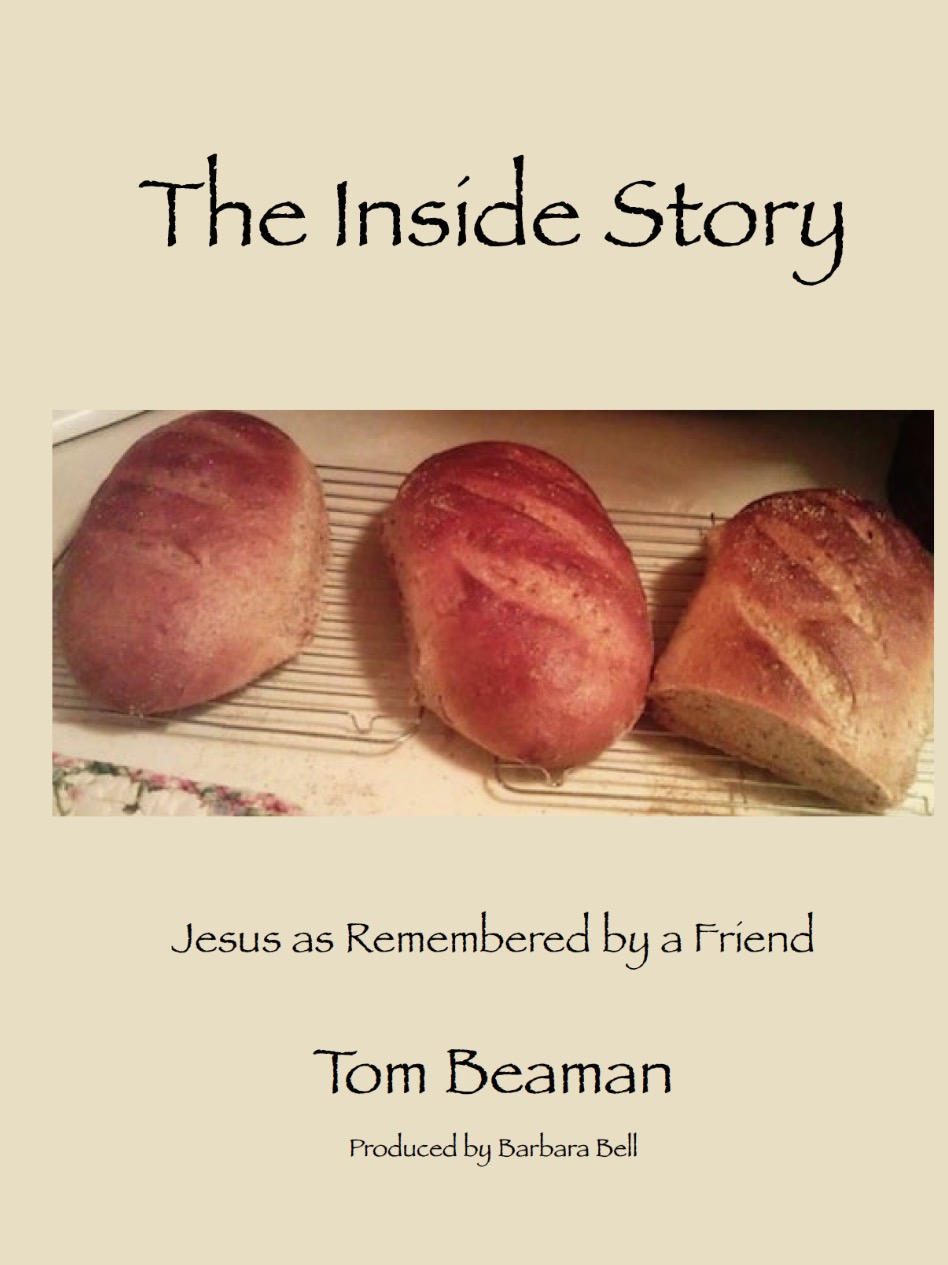
When you sink your teeth into good sourdough, the crust fights back a little; it’s chewy and a bit tough.  Making bread has been a hobby of mine for years and I’ve developed methods that work pretty well. But when I spotted a used copy of Peter Reinhart’s “Crust and Crumb” down at Barbwire Books, I snatched it up.  Peter writes about how to make “world class bread,” bread that is “good beyond belief.”  When I read that line, I had to have the book.

I keep “Crust and Crumb” by my easy chair and frequently browse through it, absorbing what he has to say. Peter’s recipes were very much like the ones I had been using.  But he spends most of the book describing specific ways to form and handle the dough.  Some of those methods require several days to make a batch of bread and seemed unnecessarily tedious to me.  So, I modified his methods with a few personal shortcuts here and there. My sourdough was improved somewhat but was not yet “good beyond belief.”  In reflecting on what was wrong, it occurred to me that perhaps I’d get better results if I actually followed Reinharts instructions. (Duh!)  Last time I made sourdough, I followed his methods to the letter.  Oh my goodness…  Not yet good beyond belief but it’s getting there…

It’s very easy to make the same mistake with the Bible – keep it by the easy chair, browse through it and modify what it says to suit what seems doable.  Throw in a personal shortcut here or there.  Here’s what Jesus’ brother Jim said about that:

“Do not merely listen to the word, and so deceive yourselves. Do what it says. Anyone who listens to the word but does not do what it says is like a man who looks at his face in a mirror and, after looking at himself, goes away and immediately forgets what he looks like. But the man who looks intently into the perfect law that gives freedom, and continues to do this, not forgetting what he has heard, but doing it—he will be blessed in what he does.” (James 1:22-25, NIV)

Just do it.  Like the bread, you won’t be “good beyond belief” but you’ll be heading in that direction.

Quotes: The Holy Bible : New International Version. 1996, c1984 (electronic ed.). Grand Rapids: Zondervan.