Category Archives: Humility

An Important Person

He’s brilliant but has always suffered from mild brain damage.  He reads and retains books on lofty, intellectual subjects far beyond my capacity but works as a busboy in a nursing home.  I bumped into him at the store and he was telling me about one of the patients who has Alzheimer’s.  She helps herself to everyone else’s leftovers while he is bussing the tables.  He stopped and thought deeply for a moment and then said, “You know, she is every bit as important as either of us…”

I love it when God speaks through His people. He reminds us that His ways are not like the ways of the world.  Like this:

” My brothers, as believers in our glorious Lord Jesus Christ, don’t show favoritism. Suppose a man comes into your meeting wearing a gold ring and fine clothes, and a poor man in shabby clothes also comes in. If you show special attention to the man wearing fine clothes and say, “Here’s a good seat for you,” but say to the poor man, “You stand there” or “Sit on the floor by my feet,” have you not discriminated among yourselves and become judges with evil thoughts?” (James 2:1-4)

Quotes: The Holy Bible : New International Version. 1996, c1984 (electronic ed.). Grand Rapids: Zondervan.

Tell and Show

In truth, it’s not what you say that matters; it’s what you do.  That’s the test.  It’s not enough to sound religious, to say a bunch of holy things about God and stuff.  It’s what you do that shows if you are spiritually alive.

“If anyone considers himself religious and yet does not keep a tight rein on his tongue, he deceives himself and his religion is worthless. Religion that God our Father accepts as pure and faultless is this: to look after orphans and widows in their distress and to keep oneself from being polluted by the world. “ (James 1:26-27)

At first glance it sounds like James is saying, “Hey, watch your language around here, buddy…” But really, he is warning people not to sound religious to impress others or maybe even God.  People may be fooled by that, but God isn’t impressed with lofty tones of voice and holy vocabulary.  He cares about what He sees us do.  Don’t misunderstand: we can’t earn our way into God’s favor with good works.  But when we have His Spirit alive within us, we will show it as we tend to help others in distress.  Even those like widows and orphans who, in that day, didn’t count for much.  “Being polluted by the world,” in this context, means caring more about my own reputation among the influential people than I do about someone else with real needs.

These two verses drag me across coals of regret. I wince to read about keeping a close rein on my tongue.  But that’s why I need these verses.  And why I need grace.

Quotes: The Holy Bible : New International Version. 1996, c1984 (electronic ed.). Grand Rapids: Zondervan.

Doubtless

Swarms of vicious, rabid mice were attacking my son, nibbling at his legs.  Screaming in terror, he couldn’t hear my voice as I told him to remove his 3-D glasses.  He kept freaking out.  I shouted at him: “Take off your glasses!”  When he finally heard me, registered that it was my voice, believed me and then tentatively reached up to remove his glasses, the mice instantly retreated into the confines of the movie screen at the Walt Disney theater.  But for awhile there, he was too terrified to listen, much less obey.

The same principle is in play when we are stressed out or suffering and ask God for wisdom (See: Wise Up).  God gives wisdom, generously and without finding fault.  But if we are too distracted by our fears to listen, it does no good.  That’s why James added this next part to his teaching on asking for and receiving God’s wisdom:

“But when he asks [God for wisdom], he must believe and not doubt, because he who doubts is like a wave of the sea, blown and tossed by the wind. That man should not think he will receive anything from the Lord; he is a double-minded man, unstable in all he does.” (James 1:6-8 – with my added explanation in brackets)

We’ve all experienced the paralysis of indecision, when our minds resemble squirrels caught in the middle of the road.  Doubt can stop you dead in your tracks.  Satan’s first strategy in the Garden of Eden was to inject doubt between the humans and God.

” …He said to the woman, “Did God really say, ‘You must not eat from any tree in the garden’?”” (Genesis 3:1b)

When you ask Him for wisdom, you could doubt that God would answer, doubt His wisdom is true, or doubt that it is really God Who you have heard.  Any one of those doubts would interfere with your ability to hear His voice and apply His wisdom.  The solution for that is practice – practice before you really are in a desperate need.  If you get in the habit of asking God for wisdom, listening for His response, and following what He tells you, soon you will be able to recognize His voice and distinguish it from all the other voices.  With practice, you will learn to trust and follow what He tells you.

You will be very glad you practiced, the next time you get attacked by mice…

Quotes: The Holy Bible : New International Version. 1996, c1984 (electronic ed.). Grand Rapids: Zondervan.

Buying God

A few days before Christmas, “[Pope] Francis issued a blistering indictment of the Vatican bureaucracy Monday, accusing the cardinals, bishops and priests who serve him of using their Vatican careers to grab power and wealth, of living “hypocritical” double lives and forgetting that they’re supposed to be joyful men of God.  “Vatican watchers said they had never heard such a powerful, violent speech from a pope…” (excerpts from Associated Press – 12/22/14)

The top leaders of the Roman Catholic church must have been pretty shocked.  What they expected to hear were some mild, innocuous, typical Christmas greetings.  But WHAM!  Stay tuned for how this plays out; it’s going to be very interesting.

Jesus rode into Jerusalem, receiving enthusiastic cheers and cries from a gathering crowd, most of whom expected Him to go into the city and begin setting up a kingdom in opposition to the Romans.  Those nasty, pagan, oppressive Romans were about to get their just desserts; Israel would become free at last.  But not so fast…   When Jesus entered the city, He turned against His own people, the leaders and bureaucrats in the Temple, not the Romans.

” Jesus entered the temple area and drove out all who were buying and selling there. He overturned the tables of the money changers and the benches of those selling doves. “It is written,” he said to them, “ ‘My house will be called a house of prayer,’ but you are making it a ‘den of robbers.’”” (Matthew 21:12-13)

The buying and selling at the Temple had gradually been put in place as a matter of convenience for traveling pilgrims.  Instead of bringing their livestock for the sacrifice, they could purchase an appropriate animal.  If they did not have the right currency for the Temple offering, they could exchange what they had when they got there.  All of this sounds reasonable, as does the need for those providing the service to make a profit.  So what was Jesus so worked up over?

There were a lot of problems represented there, including a form of racism.  But, the main problem was that the Temple was supposed to be a house of prayer (“for all nations,” according to this quote from Isaiah).  Not commerce.  Even so-called “religious” commerce transforms the mysterious and powerful process of communicating with God into a business transaction.  It is true that the “robbers” were charging exorbitant rates.  But the main problem was exchanging what was supposed to be a humble, personal interaction with God for an impersonal ritual involving money.

It’s as though the Temple leaders were encouraging the people to relate to God by saying, “Here, God, here’s a couple of bucks; go buy yourself something nice.”  Instead of reaching out to Him in heartfelt prayer.  Do we make the same mistake today?  To often, I think.  No doubt that’s part of what had the Pope so upset, too.

Quotes: The Holy Bible : New International Version. 1996, c1984 (electronic ed.). Grand Rapids: Zondervan.
AP quote:
http://www.nytimes.com/aponline/2014/12/22/world/europe/ap-eu-rel-vatican-reform.html?_r=0

What to Look For

If there is a puddle under a used car, don’t buy it.  Same thing with suspicious-looking paint jobs.  But how can you “kick the tires” on a church?  How can you tell if a church really represents Jesus in a true way?  You have heard horror stories about dysfunctional churches; how can you avoid the bad ones and find the good ones?  Here is one thing to look for:  How high and mighty is the pastor?  How closely does the pastor live by these words of Jesus?

“Jesus called them together and said, “You know that the rulers of the Gentiles lord it over them, and their high officials exercise authority over them. Not so with you. Instead, whoever wants to become great among you must be your servant, and whoever wants to be first must be your slave— just as the Son of Man did not come to be served, but to serve, and to give his life as a ransom for many.”” (Matthew 20:25-28)

Jesus not only commanded His followers to adopt the heart of a servant toward one another, He demonstrated this attitude by His own act of sacrifice.

If you notice a pastor who expects to be treated with special privilege, who struts about with an air of superiority, you can be pretty sure that church is in bad shape.  It may look all nice and shiny, but there is something essentially wrong at its core.  Pastors who know Jesus and follow him will show it by their humbleness and readiness to serve.  The same is true for the rest of the congregation, but it is easier to notice by observing the pastor.

Sadly, this one test is one many, many churches would fail.  But, when you shop for used cars, most of those should be avoided, too.  Not every church is a place Jesus attends.  Don’t overlook this telltale sign.

Quotes: The Holy Bible : New International Version. 1996, c1984 (electronic ed.). Grand Rapids: Zondervan.

Finding the Holy Grail

Victor Borge used to hold out his wrist watch and say, “You like this watch?  My father gave it to me on his deathbed. (Then a perfectly timed pause…) Twenty five bucks!”  Hilarious, because who would try to weasel money from his son when he is just about to die?  Just as incomprehensible to us is the question James and John asked Jesus after He told them He was just about to die.  No, wait a minute… they didn’t ask Him, they got their Mother to do it!  Probably thought she could manipulate Jesus better…

” Then the mother of Zebedee’s sons came to Jesus with her sons and, kneeling down, asked a favor of him. “What is it you want?” he asked. She said, “Grant that one of these two sons of mine may sit at your right and the other at your left in your kingdom.” (Matthew 20:20-21)

Are you kidding me?  Jesus had just told them He would be flogged and crucified and they are angling for the best seats?  It doesn’t make sense.  As Jesus points out, they really didn’t understand  what He had just told them.  They must have thought He was using symbolic terms when He said those things about being tortured and killed.  Jesus doesn’t criticize them for asking, but turns their insensitivity and ambition into an important lesson:

“You don’t know what you are asking,” Jesus said to them. “Can you drink the cup I am going to drink?” “We can,” they answered. Jesus said to them, “You will indeed drink from my cup, but to sit at my right or left is not for me to grant. These places belong to those for whom they have been prepared by my Father.”” (Matthew 20:22-23)

Jesus is going to be King, He is going to rule over a “Kingdom.”  But His path to that position for Him leads through the “cup” of suffering and sacrifice.  And absolute submission to the will of His Father.  Those who follow Jesus must understand that path and be prepared for that dynamic.  It’s not that all Christians will be crucified, or even all of the apostles (although most of them were tortured to death).  It is that following Jesus flips the idea of what it means to be influential.  

It’s not prestige and privilege, it’s humility and service.  That is the “cup,” the real Holy Grail of Jesus.  It is ironic how many stories have been written about how people, obsessed by greed, expended such effort to find the Holy Grail.  But the real “cup” of Jesus is right here to be taken up by anyone.  That is, anyone who first turns away from his own greed and ambition.

Chew on that…  More to come…

Quotes: The Holy Bible : New International Version. 1996, c1984 (electronic ed.). Grand Rapids: Zondervan.

Hand in Hand

You have seen him: He’s just caught the game-winning touchdown pass and now he stands in the end zone, his arms raised and his hands lifted up to receive the adulation of the crowd.  His face says, “That’s right, I’m the greatest!”  Picture him.  Now compare ???????????????????????????????him with this little boy, also with his arm extended, but this time with his hand holding tight to the hand of his father because the waves are so high.  (http://annmareebeaman.com/)

You’ve seen him, too, perhaps as he goes into the schoolyard for the first time, or approaches the lions’ cage at the circus, holding onto Dad’s hand.  Two boys with their arms held high: Who is the greatest?

” At that time the disciples came to Jesus and asked, “Who is the greatest in the kingdom of heaven?” He called a little child and had him stand among them. And he said: “I tell you the truth, unless you change and become like little children, you will never enter the kingdom of heaven. Therefore, whoever humbles himself like this child is the greatest in the kingdom of heaven.” (Matthew 18:1-4)

In our world, we think that the greatest is the strongest, the most gifted, the richest, the coolest, the most famous, the most powerful, the guy with his arm raised up in the end zone.  Jesus said that guy doesn’t even make the cut for the Kingdom of Heaven – that is, unless he changes and becomes like a little child!  But like a little child in what respect?  In humbling himself.  

A child knows he needs help, that he can’t succeed on his own, so he reaches up and takes the hand of his father.  When it comes to entering the Kingdom of Heaven, becoming a child of God and attaining eternal life, we need to begin by realizing we cannot do this on our own. To do so on our own would require absolute perfection, from the moment of our birth until we die.  Impossible.  We need to reach up and take hold of the Hand of the Only One Who can accomplish it, Who can open the door to the Kingdom of Heaven.  When we reach out for His hand, we change from the world’s “can-do,” arrogant attitude, and adopt the humility of a child – trust and dependence.  In that position of weakness and trust, we hold on to His strength and competence.

Like Elvis sang:

Put your hand in the hand of the man
Who stilled the water
Put your hand in the hand of the man
Who calmed the sea
Take a look at yourself
And you can look at others differently
Put your hand in the hand of the man
From Galilee

(Put Your Hand in the Hand – by Gene MacLellan)
Bible quotes: The Holy Bible : New International Version. 1996, c1984 (electronic ed.). Grand Rapids: Zondervan.

Using a Four-Letter Word

Jesus began to shock His disciples with a four-letter word.  They hadn’t heard Him use it before, but once Peter declared he knew Jesus was the Son of God and the Christ, then Jesus began to startle them and offend them with that word.  Look for it:

” From that time on Jesus began to explain to his disciples that he must go to Jerusalem and suffer many things at the hands of the elders, chief priests and teachers of the law, and that he must be killed and on the third day be raised to life.” (Matthew 16:21)

Talking about the word, “must.”  Jesus demonstrated a perfect life, one that is only possible with a perfect connection with The Sovereign God.  By that connection Jesus performed many signs and miracles. He said His words were the words of God, because, as He said it, “The Father lives in Me” (John 14:9-10).  But one of the most amazing manifestations of that connection with God was that Jesus knew the “must” for His life.  He knew what God had decreed must happen.  He knew it and He surrendered to it.

“Peter took him aside and began to rebuke him. “Never, Lord!” he said. “This shall never happen to you!” Jesus turned and said to Peter, “Get behind me, Satan! You are a stumbling block to me; you do not have in mind the things of God, but the things of men.”” (Matthew 16:22-23)

When Peter understood Jesus’ identity, Jesus said he was blessed, because God had revealed it to him (See: Better Proof).  But when he failed to understand what Jesus must go through, by the decree of God, substituting his own ideas and desires, Jesus turned on him!  

What is your “must?”  Don’t know?  Me neither.   But God does.  As we surrender to Him, there may be times when He shows us what we “must” do.  But even when He does not, the benefit and power of living in readiness to accept God’s “must” for our lives is taught throughout Scripture.

David wrote:

“Lord, you have assigned me my portion (how God provides for him) and my cup (how God asks him to suffer) …” (Psalm 16:5a – with my explanations)

James said:

“Humble yourselves before the Lord, and he will lift you up.” (James 4:10)

Jesus taught us to pray, “Thy will be done.”  In other words, “Lord, I acknowledge that the “must” You have assigned for my life is good, and I submit.”  

Must – a shocking, tough, four-letter word that we “must” learn to use more…


Quotes: The Holy Bible : New International Version. 1996, c1984 (electronic ed.). Grand Rapids: Zondervan.

Jesus Throws a Combination

In a fistfight, an uppercut rarely works by itself.  You need a combination, at least two punches, deployed in quick succession and without a pause.  The most basic combo starts with a jab, to distract your opponent, followed by a cross, to take his head off.

Jesus threw a combination of miracles at His disciples, first to startle them and then to take their heads off.  His “jab” was multiplying 5 loaves of bread to feed many thousands of people.  Then, immediately, He threw a “right cross” – walking on the water.  When you study this “one, two punch,” of miracles in Matthew 14, you begin to see many layers of meaning and purpose.  But first, let’s focus on the word “immediately.”  Both Matthew and Mark say these two events were a one, two punch; Jesus set up the second one immediately.

Immediately Jesus made the disciples get into the boat and go on ahead of him to the other side, while he dismissed the crowd.” (Matthew 14:22, NIV)

Why immediately?

Consider the flow of this:  First, Jesus shows them He can miraculously multiply bread.  He throws them off balance.  They are amazed and awestruck, but they are also feeling secure, because Jesus is with them and He can do anything.  Then immediately Jesus sends them off on their own.  They think, “No problem, we can do this; we’re good at rowing.”  But then, just when they feel competent and in control, a terrifying wind comes up against them.

“… but the boat was already a considerable distance from land, buffeted by the waves because the wind was against it.” (Matthew 14:23b-24)

 First they pull harder; “Come on guys, we got this… ”  Then they become fatigued.  And frightened, fighting off panic.  Their competence and camaraderie evaporates as the wind blows harder and the waves buffet them with menacing power.  The storm intensifies, continuing on through the night until after 3:00 in the morning.

Then, BOOM!  The second punch.

“During the fourth watch of the night Jesus went out to them, walking on the lake. When the disciples saw him walking on the lake, they were terrified. “It’s a ghost,” they said, and cried out in fear. But Jesus immediately said to them: “Take courage! It is I. Don’t be afraid.”” (Matthew 14:25-27)

Why did Jesus set that up immediately?  What was He trying to do to them, sending them from their confident glow in His presence to a terrifying ordeal in the midst of their comfort zone?  Jesus set up the first miracle by saying, “You feed these thousands of people.”  Their response was “There’s no way we could do that!”  With His first punch, Jesus did it, He fed the people.  Then, immediately, He sent them off to do something they were sure they could do.   Only to discover they could not.  In the midst of their fatigue and panic, here came Jesus, walking to them on the water!

One, two punch.  Before we continue to look at the rest of what this means, ponder the word, immediately, and let Jesus knock your head off.
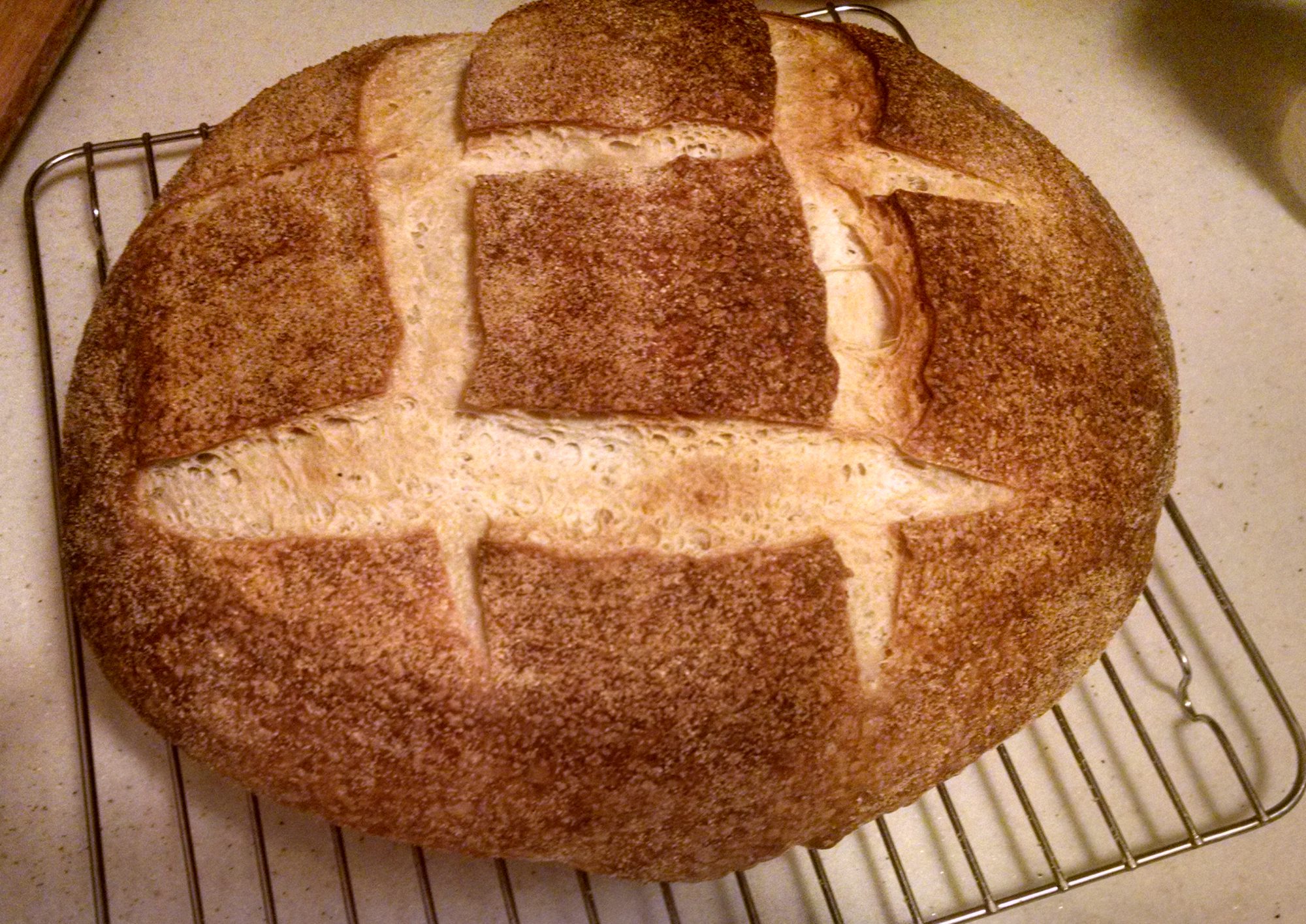
Pay Attention

When was the last time you saw a miracle?  Jesus performed many miracles during His time on earth, to make people aware of God’s presence and power.  He used miracles as “signs” to validate His own identity and message while pointing people to God.  He said,

“Believe me when I say that I am in the Father and the Father is in me; or at least believe on the evidence of the miracles themselves.” (John 14:11)

He still performs miracles today and it is for the same purpose.  But some people are so distracted by the substance of the miracle – whether it is something as amazing as physical healing or something as simple as providing bread – that they miss the sign contained in it.  After miraculously feeding a huge gathering, Jesus warned them not to follow Him around to get more bread.  Miracles are done to open our eyes to the power of God!  Even physical healing, as wonderful as it is and as grateful as we are to receive it, is merely temporary.  You get healed of one thing only to die later on of something else!    Miracles are signs that point us to the presence and power of God.

Trouble is, many people cannot see miracles.  Perhaps miracles make them uneasy.  Their first response is to explain away what happened by trying to understand the physical explanation of how it occurred.  But the point in a miracle is not how it was done but rather, why it was done!  I am convinced that the reason we in the United States don’t see more miracles is because we have blinded ourselves to them.  We are so fixated on the  how that we miss the why.  Jesus reflected on that kind of blindness:

” At that time Jesus said, “I praise you, Father, Lord of heaven and earth, because you have hidden these things from the wise and learned, and revealed them to little children.” (Matthew 11:25)

Jesus didn’t want us to be childish, but childlike.  He wasn’t telling people to park their brains at the door but, rather, to open their eyes!  To recover their natural capacity for wonder and awe when confronted by the presence and power of God.  To look for why instead of smugly dismissing the miraculous with explanations of how.  Open your eyes!  Pay attention!

This is more important than you may realize.  Faced with the stony faced blindness of the “wise and learned,”  Jesus warned them:

“And you, Capernaum, will you be lifted up to the skies? No, you will go down to the depths. If the miracles that were performed in you had been performed in Sodom, it would have remained to this day. But I tell you that it will be more bearable for Sodom on the day of judgment than for you.” (Matthew 11:23-24)

More bearable for the people of Sodom, because they would have paid attention, they would have gotten the point.  They would have turned away from their arrogant, “know-it-all” attitudes, and responded to the power and majesty of God with humility and reverence.